
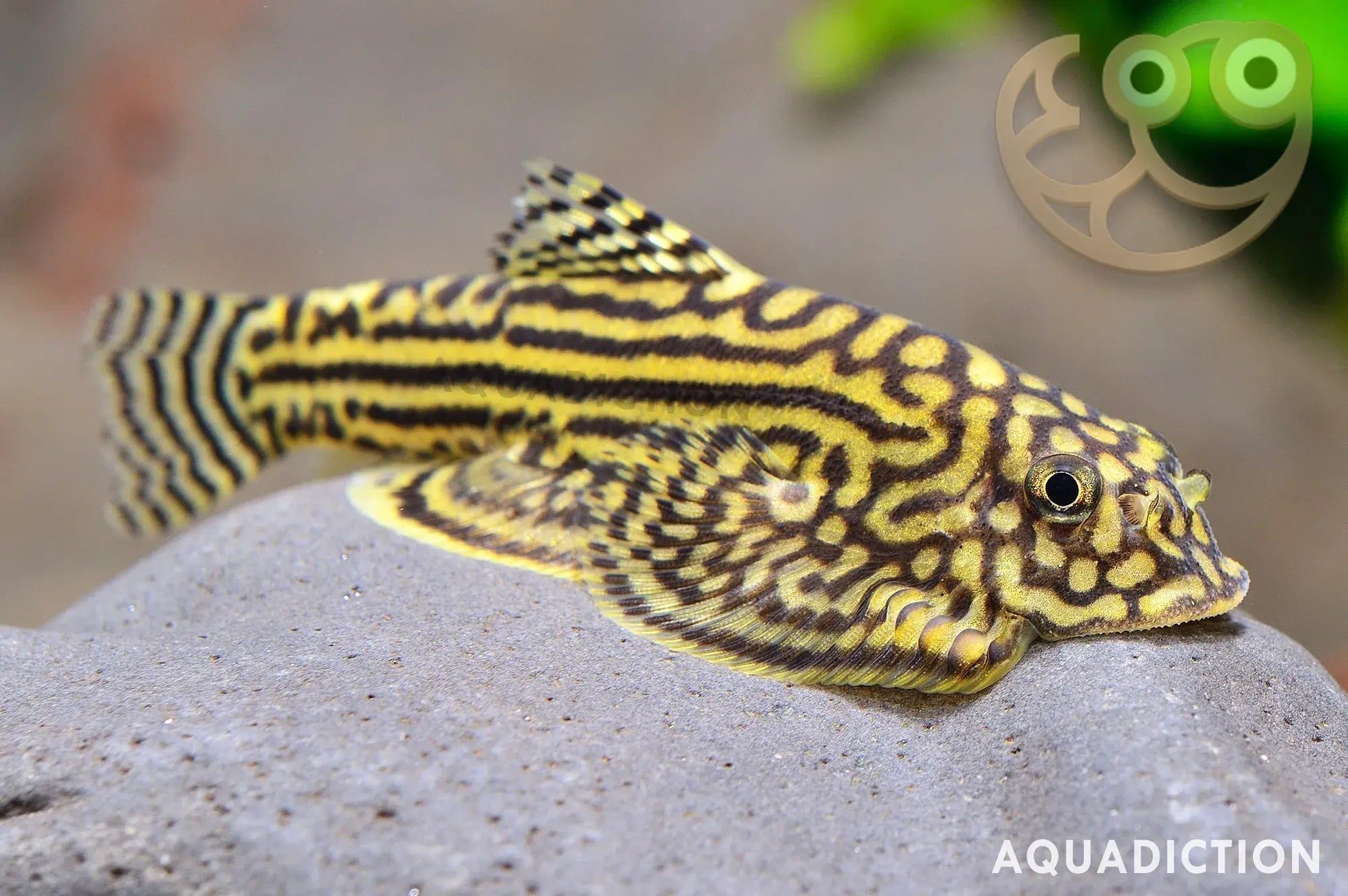
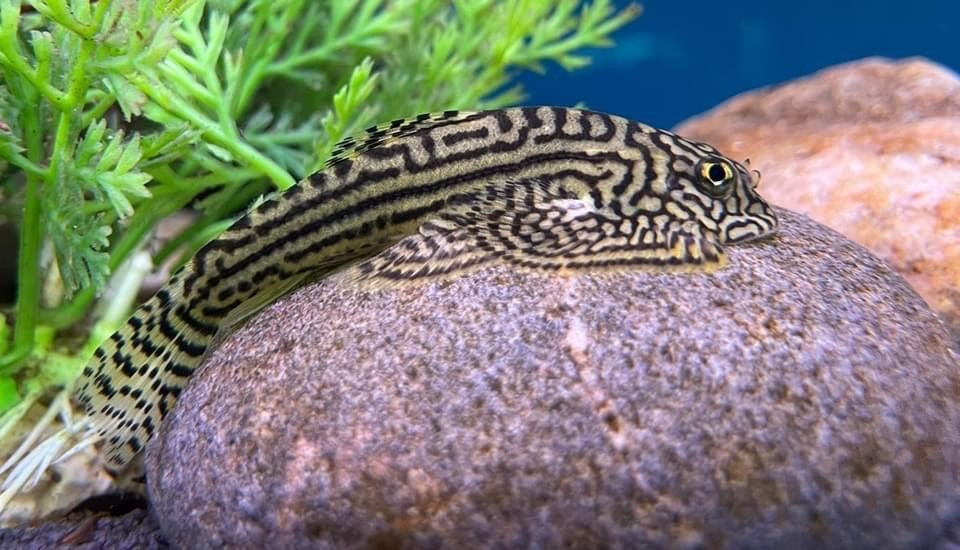
Sewellia lineolata – Gold Ring (Tiger / Reticulated) Hillstream Loach (~5.5–7 cm / ~2–2.5″)
-
Estimated Delivery:Sep 07 - Sep 11
-
UPS Next Day Air Shipping Charges 65$
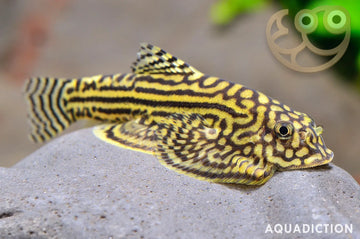
Sewellia lineolata – Gold Ring (Tiger / Reticulated) Hillstream Loach (~5.5–7 cm / ~2–2.5″)
📦 Description
The Gold Ring / Tiger Hillstream Loach (Sewellia lineolata) is a visually striking hillstream loach featuring bold, maze-like dark markings on a gold-tinted background. Native to fast-flowing, oxygen-rich streams in Vietnam and Laos, it reaches approximately 5–7 cm in adult size. It clings to rocks using suction-capable fins and spends much of its time grazing on algae and biofilm. This peaceful species is ideal for river-style aquaria and showcases playful gliding behavior across the substrate and glass.
🧰 Care Instructions
-
Tank Size: Minimum 20 gal (~75 L) for a small group; a longer footprint is preferred for horizontal grazing activity.
-
Water Flow & Oxygen: Moderate to strong unidirectional current; high dissolved oxygen essential—may use powerheads or spraybars. Water Conditions:
-
-
Temperature: 68–75 °F (20–24 °C)
-
pH: 6.5–7.5
-
Hardness: Soft to medium (10–15 °dGH) Substrate & Decor: Fine-grain sand or smooth gravel. Provide flat rocks and river stones for grazing and resting. Bright lighting to encourage natural biofilm growth.
-
-
Diet: Primarily grazes algae and biofilm. Supplement with sinking algae wafers, spirulina pellets, frozen bloodworms, brine shrimp, and blanched vegetables. Meaty foods should be occasional.
-
Social Behavior: Stoical shoaling species—keep in groups of at least 6 individuals to reduce stress and promote natural behavior.
-
Maintenance: Use a mature tank rich in biofilm. Weekly water changes (20–30%), efficient filtration, and minimal scrubbing of grazing surfaces help maintain ideal conditions.
-
Tolerances: Despite reputation, many keepers report success in stable conditions with temperatures up to ~76 °F—though cooler water is preferred. Avoid ammonia spikes and poor oxygen levels.